
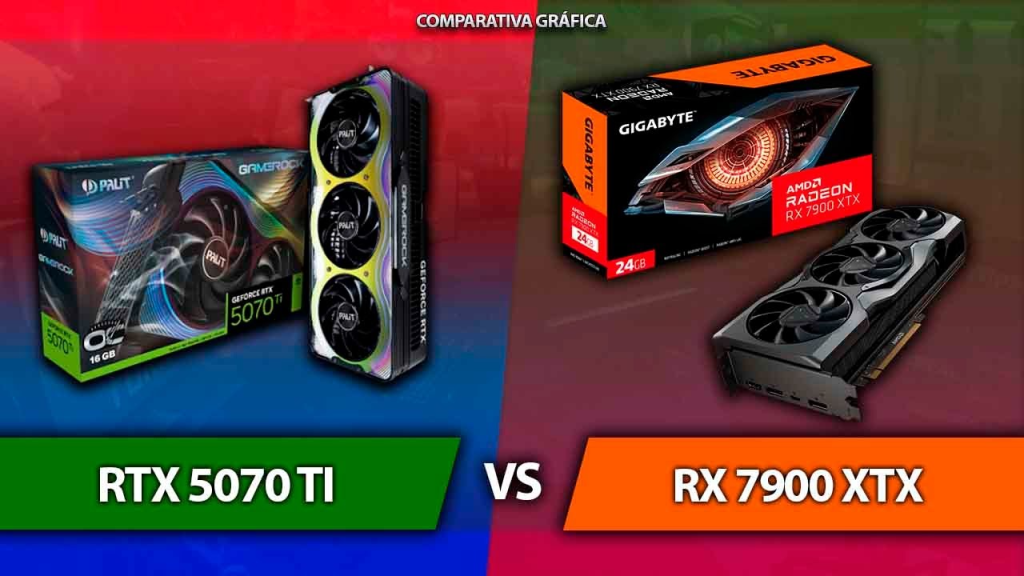
Hey there, my friend! If you’re here, it’s probably because you’re wondering which graphics card is the better choice between the RX 9700XT and the RTX 5070, right? Well, I’m here to make it all a bit more interesting and fun for you. I mean, let’s be real—sometimes these comparisons get pretty dry with all those technical terms, but no worries, I’ve got your back. I’ll break it down in a way that makes sense without all the jargon. And just so you know, we’re diving into some serious details, but also keeping it chill. Let’s do this.
1. Design: RX 9700XT vs RTX 5070
First off, let’s talk about what these bad boys look like. I know, the aesthetics aren’t everything, but you still wanna know, right? The RX 9700XT is a pretty beefy card with an aggressive, industrial design that screams power. I gotta say, it looks pretty mean. But hey, if you’re one of those who care about noise levels, this one can get a little loud under heavy gaming loads, though the cooling system does its job.
On the other hand, the RTX 5070 has a more polished, sleek design. It’s got that clean, minimalist vibe, but don’t let that fool you—it’s still a beast. If you’ve used Nvidia cards before, you’ll know they’re known for top-tier cooling systems, and this one’s no exception. Plus, if you’re into RGB lighting, the RTX 5070 has that extra flair.
Comparison Table: RX 9700XT vs RTX 5070
| Feature | RX 9700XT | RTX 5070 |
|---|---|---|
| Architecture | RDNA 3 | Ada Lovelace (Nvidia Ampere) |
| CUDA Cores | 5120 | 5120 |
| Ray Tracing | Yes, but less advanced | Yes, with advanced RT Cores |
| DLSS (Deep Learning Super Sampling) | No | Yes (DLSS 3.0) |
| Memory | 16 GB GDDR6 | 12 GB GDDR6X |
| Base Clock Speed | 2.1 GHz | 2.5 GHz |
| Power Consumption | 250 W | 220 W |
| Approximate Price | More affordable (Lower price) | More expensive (Higher price) |
| 1080p Performance | Excellent | Excellent |
| 1440p Performance | Very good | Excellent |
| 4K Performance | Good | Excellent |
| Ray Tracing Support | Basic | Advanced (More realistic in games) |
| Cooling | Efficient, but can be noisy | Very efficient and quiet |
2. Performance: Raw Power for Gaming
Alright, now let’s get to the good stuff—performance. And here’s the deal: the RTX 5070 takes the lead, but there’s a little caveat. If you’re a gamer who loves playing at 1440p or even 4K, the RTX 5070 is definitely the card for you. However, don’t sleep on the RX 9700XT, because it can still hold its own and surprise you in most situations.
The RTX 5070 really shines when it comes to demanding games like Cyberpunk 2077 and Call of Duty at high resolutions. Nvidia’s ray tracing tech gives it that extra touch with realistic lighting and shadows. But, fair warning, all that beauty comes at a price—it requires more GPU power.
Now, the RX 9700XT is a real contender, especially for gaming at 1080p and 1440p. It has RDNA 3 architecture, which makes it competitive in those scenarios, and in many cases, it can run at nearly the same level as the RTX 5070. If ray tracing isn’t a dealbreaker for you and you’re focused on solid FPS, the RX 9700XT still delivers.
Gaming Performance Comparison (Average FPS)
You can create a chart comparing the average FPS performance of both cards in popular games. A bar or line graph would work well to show how each card performs in games like Cyberpunk 2077, Shadow of the Tomb Raider, and Call of Duty: Modern Warfare 2.
| Game | RX 9700XT (FPS) | RTX 5070 (FPS) |
|---|---|---|
| Cyberpunk 2077 (1440p, Ultra) | 45-55 FPS | 70-80 FPS |
| Shadow of the Tomb Raider (1080p, Ultra) | 120-130 FPS | 140-150 FPS |
| Call of Duty: Modern Warfare 2 (1080p, Ultra) | 140 FPS | 160-180 FPS |
| Red Dead Redemption 2 (4K, High) | 40 FPS | 60 FPS |
Price and Power Consumption Comparison Chart
For this chart, you can compare the price and power consumption (W) of both cards. A bar or circular graph would be ideal for visually showing the average price and power consumption, helping you quickly see which card is more power-efficient and fits your budget.
3. Ray Tracing and DLSS: The Ultimate Battl
Now let’s dive into the ray tracing and DLSS territories. This is where the RTX 5070 really pulls ahead. Nvidia’s DLSS (Deep Learning Super Sampling) is a game-changer—it lets you run games at higher resolutions without killing your frame rate. It enhances visuals while still giving you a smooth experience. And let’s not forget ray tracing—it’s top-notch on the RTX 5070. Games like Control and Battlefield V look insane with it enabled.
On the flip side, the RX 9700XT also comes with some ray tracing capabilities, but it’s not quite up to par with Nvidia’s tech. If ray tracing is something you care about, you’ll notice the difference in games that support it. However, for traditional gaming, the RX 9700XT holds its own and performs really well without needing all those extra features.
4. Pricing: The Sweet Spot Between Quality and Cost
I know this is always a big question—price. It’s not the only factor, but it sure carries a lot of weight. Here, the RX 9700XT might make you smile a little more because it offers great performance at a lower price than the RTX 5070. If you’re not all about ray tracing and the latest technologies, but you still want amazing performance, the RX 9700XT gives you a ton of bang for your buck.
The RTX 5070, on the other hand, does come with a higher price tag. While it’s packed with premium features like DLSS and ray tracing, that jump in price might not be worth it for everyone. If you’re someone who cares about cutting-edge tech and is willing to pay a bit more, then the RTX 5070 is the way to go. But if you’re more budget-conscious, the RX 9700XT is still a solid choice.
5. Power Consumption and Heat: Keeping Things Cool
Now, let’s talk about power consumption and heat. The RX 9700XT can be a bit power-hungry, especially when you’re pushing it hard. It’s not a dealbreaker, but if you don’t have a strong PSU (power supply unit), it might cause a few concerns. That said, most modern PSUs should handle it just fine.
The RTX 5070 also has a decent power draw, but Nvidia has made improvements in energy efficiency over the years. In terms of heat management, both cards do a great job of staying cool under load, but the RTX 5070 benefits from Nvidia’s advanced cooling solutions. So, if heat and power consumption are concerns for you, the RTX 5070 is a slightly better option in this area.
6. User Experience: The Software Difference
When we talk about drivers and software, Nvidia really has an edge with its GeForce Experience. It makes updating your drivers super easy and also lets you tweak settings on the fly. If you’re not into fiddling with a bunch of settings and just want things to work smoothly, Nvidia’s software is great for that.
The RX 9700XT also has solid drivers, but I’ll be honest—AMD’s software can sometimes be a little more finicky. That said, if you’re willing to put up with a few extra clicks here and there, you’re still going to get excellent performance.
7. Which One to Choose?
Alright, here’s the big question. If you’re after the best tech and don’t mind spending a bit more for top-of-the-line features like ray tracing, DLSS, and more, then the RTX 5070 is your clear winner.
However, if you’re on a budget but still want incredible performance in most games, the RX 9700XT will give you great value for the money. It’s especially ideal for gamers who don’t need all those fancy extras but still want solid power for their games.
Conclusion: It All Comes Down to You
At the end of the day, it’s all about what you need. If money isn’t an issue and you want the latest and greatest, the RTX 5070 is the way to go. But if you’re looking for a more affordable option without sacrificing too much performance, the RX 9700XT is an awesome choice. Both cards are powerhouses, and either one is going to make your gaming experience epic.