
¡ANTES DE CONTINUAR!
Apóyanos con tu suscripción antes de continuar CON LO QUE BUSCAS.
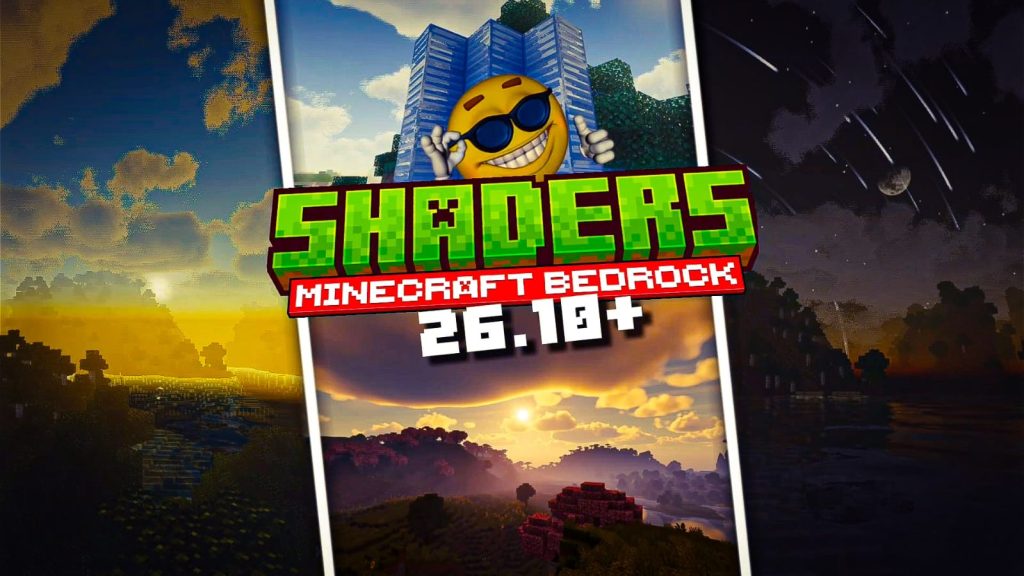
From Simple Shaders to RenderDragon: The Evolution of Graphics in Minecraft Bedrock
Minecraft Bedrock Edition has gone through one of the most fascinating graphical evolutions in modern gaming. What started as a simple, blocky sandbox with minimal lighting effects gradually became a platform capable of advanced rendering techniques, realistic lighting, and even ray tracing. This transformation didn’t happen overnight—it’s the result of years of experimentation, community creativity, and major engine overhauls by Mojang.
In the early days, Minecraft Bedrock (then known as Pocket Edition and later Windows 10 Edition) had very limited graphical capabilities. Unlike Java Edition, which benefited from a strong modding community, Bedrock players had fewer options for visual enhancements. However, the community quickly found ways to push the boundaries using resource packs and early shader-like modifications. These packs mimicked effects such as dynamic lighting, water reflections, waving foliage, and improved shadows—though they were often limited by the engine itself.
The real turning point came when Mojang announced a major graphics engine shift: the introduction of RenderDragon. This new engine was designed to modernize Minecraft’s rendering pipeline, improve performance across platforms, and enable future graphical features. While it promised a lot, the transition wasn’t easy for players. One of the biggest immediate impacts was the breaking of many existing shader packs. Since RenderDragon changed how the game handled rendering at a fundamental level, most of the community-made shaders stopped working almost overnight.
For a while, this created frustration in the Bedrock community. Players who loved customizing their visuals felt like they had lost a huge part of their experience. Unlike before, RenderDragon was more closed and limited in terms of external shader support. This led to a period where high-quality shaders were nearly impossible to use in Bedrock Edition, especially on platforms like consoles and mobile devices.
However, Mojang had bigger plans.
With RenderDragon in place, Minecraft Bedrock became capable of supporting advanced rendering technologies—most notably RTX ray tracing. In collaboration with NVIDIA, Mojang introduced RTX support on compatible Windows devices. This brought physically accurate lighting, real-time reflections, global illumination, and realistic shadows to the game. For the first time, Minecraft worlds could look almost photorealistic while still preserving their iconic blocky style.
RTX worlds and resource packs showcased what was truly possible with the new engine. Light could bounce between surfaces, water reflected the environment with stunning accuracy, and emissive blocks illuminated entire spaces dynamically. It was a massive leap forward, though limited to high-end hardware.
As the engine matured, the idea of “Vibrant Visuals” began to emerge within the community and Mojang’s broader vision. While not always an official single feature or update, the concept represents the gradual enhancement of Minecraft’s visual identity—balancing performance, accessibility, and beauty. From improved lighting systems to better fog, sky rendering, and atmospheric effects, Bedrock Edition has continued to evolve visually even beyond RTX.
Today, Minecraft Bedrock sits at a unique point in its history. While traditional shader support is still restricted compared to Java Edition, the foundation laid by RenderDragon opens the door for future innovations. Whether through official features, marketplace content, or new rendering updates, the potential for visual improvement remains enormous.
The journey from simple shader packs to a fully modern rendering engine reflects not just technological progress, but also the passion of the Minecraft community. Players have always sought to make their worlds more immersive, and despite setbacks, that creativity continues to drive the evolution of the game.
In the end, Minecraft Bedrock’s graphical evolution is a story of change, adaptation, and possibility—one that is far from over.