
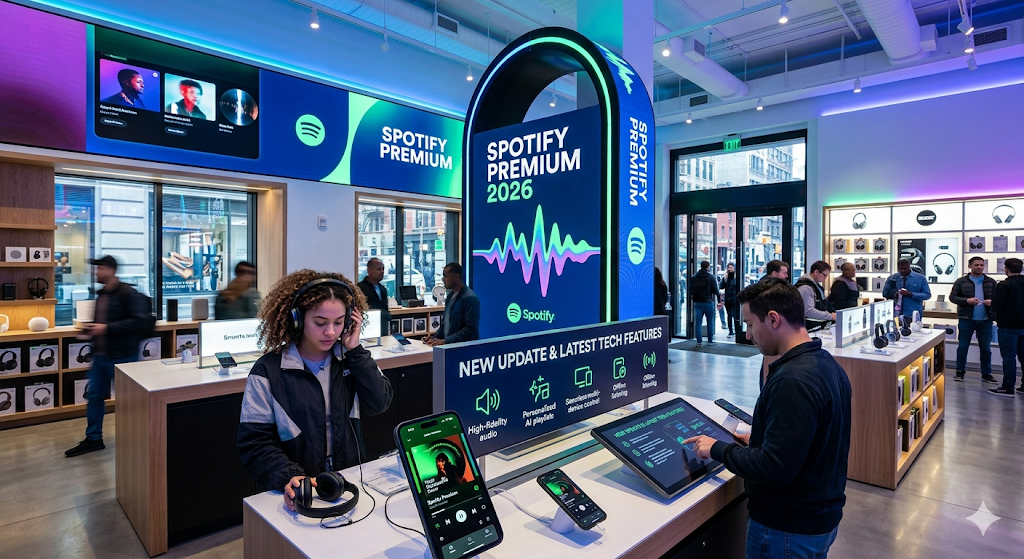
The digital streaming landscape is evolving faster than ever, and audio platforms are forcing their way into a new era of high-fidelity experiences. Spotify, the global giant in music and podcast streaming, has officially rolled out its most ambitious system overhaul yet. The Spotify Premium 2026 new update introduces groundbreaking technological advancements designed to fundamentally redefine how we consume audio.
🔒 Acceso al Contenido
Únete a nuestro canal de WhatsApp para desbloquear el contenido.
From deep artificial intelligence integration to long-awaited core hardware optimizations, this latest version is not just a minor facelift—it is a complete re-engineering of the premium user experience. If you are a current subscriber or considering upgrading to a paid tier this year, here is everything you need to know about the latest tech features and major updates.
1. Next-Generation High-Fidelity (Hi-Fi) Audio Architecture
For years, audiophiles and premium subscribers have demanded a massive leap forward in sound quality. With the 2026 update, Spotify delivers a brand-new, ultra-low-latency audio engine built specifically for high-end audio equipment.
- Lossless Audio Streaming: Premium users can now unlock uncompressed, studio-quality audio formats. This ensures that every instrument, subtle frequency, and vocal layer is preserved exactly as the artist intended in the recording studio.
- Spatial Audio & Dynamic Head Tracking: Utilizing advanced acoustic algorithms, the update offers fully immersive 3D soundscapes. When paired with compatible In-Ear Monitors (IEMs) or high-fidelity headphones, the audio dynamically shifts based on your environment, creating a live-concert feel right inside your ears.
- Advanced Bitrate Control: A smart, adaptive system automatically monitors your network conditions to stream at maximum bitrates without causing buffering or sudden playback interruptions.

The Top Spotify Competitors At a Glance
- Apple Music (Best for Ecosystem Integration): Spotify's closest rival. It seamlessly integrates across all Apple devices and offers high-quality lossless and spatial audio (Dolby Atmos) at no extra charge. However, it lacks a free, ad-supported tier.
- YouTube Music (Best for Video & Catalog Depth): Backed by Google's massive search engine, it easily integrates video content, official audio, live performances, and fan covers that you cannot find anywhere else. It is also highly popular because it comes bundled with YouTube Premium.
- Amazon Music Unlimited (Best for Smart Homes & Value): Offers a huge library featuring HD and Ultra HD audio formats. It is highly convenient for users with Alexa-enabled ecosystems and provides deep subscription discounts for Amazon Prime members.
- Tidal / Qobuz (Best for Audiophiles): These platforms target pure sound quality. They offer studio-grade hi-res audio files and better artist payouts, making them the preferred choice for users with high-fidelity headphones and premium audio gear.
2. Advanced Personalized AI Playlists and Curation
Spotify has taken its machine learning capabilities to an unprecedented level. The 2026 update moves past static algorithmic recommendations to introduce a fully context-aware, real-time audio assistant.
Contextual AI Engine
The new interface integrates an intuitive AI playlist generator that adapts to your daily routine. By analyzing real-time data, the platform can instantly tailor soundtracks to match your specific activities—whether you are deeply focused on a software development project, training at the gym, or winding down for the evening.
Seamless Voice & Text Prompting
Instead of endlessly scrolling through generic genres, premium subscribers can now input descriptive natural-language prompts. Typing or saying commands like "Give me a dark ambient electronic mix for late-night programming" generates a highly customized, perfectly mixed queue within seconds.
3. Seamless Multi-Device Control and Ecosystem Integration
In today’s tech-driven world, cross-platform fluidity is non-negotiable. The latest technical architecture optimizes how the app communicates across different hardware ecosystems, minimizing friction and pairing delays.
- Zero-Latency Hand-Off: Switching your active audio session from a flagship mobile device to a desktop setup, smart TV, or home audio system is now instantaneous. The audio stream transfers smoothly without a single syllable being cut off.
- Unified UI/UX Design: The interface has received a clean, modern aesthetic overhaul. It prioritizes faster navigation, reduces visual clutter, and places essential playback controls precisely where your muscle memory expects them to be.
- Enhanced Offline Mode Optimization: The offline download protocol has been completely rewritten. Content downloads significantly faster, uses highly efficient compression to save local storage, and preserves premium audio quality flawlessly when you are completely disconnected from the network.
4. Is the 2026 Spotify Premium Subscription Worth It?
When evaluating the current subscription plans, the decision comes down to the sheer value of these new technological integrations. While the standard free version remains an option for casual listeners, it is heavily restricted by disruptive advertising, lower bitrates, and a total lack of advanced personalization features.
For users who value pristine audio quality, seamless device synchronization, and cutting-edge AI utility, the Spotify Premium 2026 update represents a massive leap forward. It cements the platform's position not just as a music library, but as a sophisticated, high-performance technology hub tailored for the modern digital lifestyle.